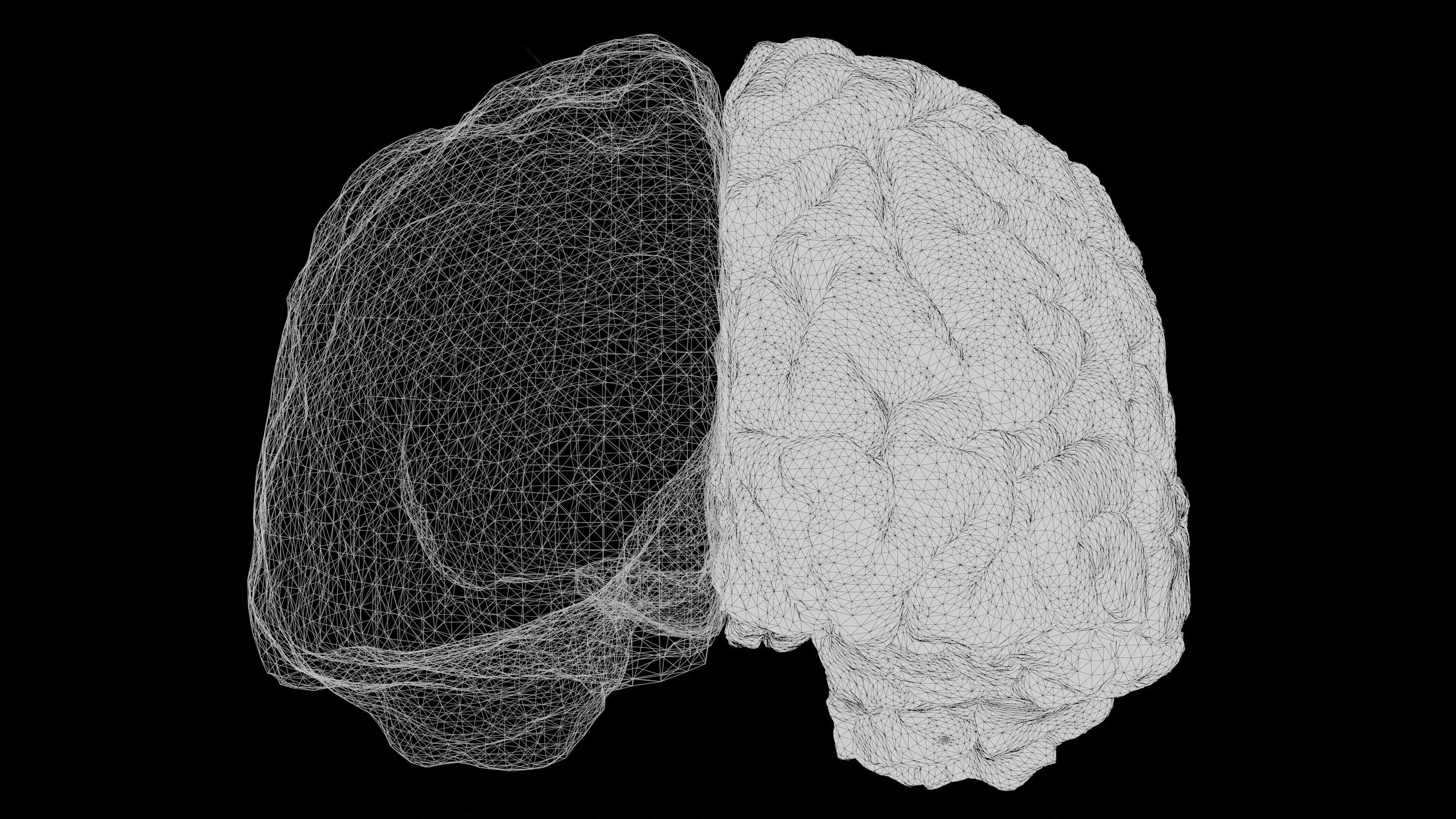
Advancements in AI-driven brain decoding
The year 2026 has introduced a transformative era for auditory neurotechnology, driven by the convergence of deep learning and neurophysiology. Researchers are moving beyond simple brain mapping toward interpreting dynamic neural trajectories that represent the fluid evolution of human perception.
Breakthroughs using AI
This paradigm shift is exemplified by the Brain-dynamic Convolutional-Network-based Embedding (BCNE) model developed at Stanford, which distills complex four-dimensional neural data into clear trajectories to visualise how brain states change over time. By treating brain data as a continuous "movie" rather than a series of static snapshots, AI can now filter out neural noise to spotlight valuable patterns, essentially tracking how mental states like emotion and comprehension evolve as a listener processes sound.
Breakthroughs in "mind-captioning" have further enabled the direct translation of these neural patterns into descriptive language. Systems published in Science Advances now generate coherent sentences from fMRI signals, achieving up to 50% accuracy in describing what a person is viewing or even recalling. By using language models like RoBERTa to optimise word sequences against brain-decoded semantic features, these interpretive interfaces offer a new pathway for individuals with profound communication barriers to express thoughts that were previously trapped. This technology suggests that the brain uses similar neural representations for both external perception and internal "mind's eye" recall, allowing for text-prompt systems that can bypass traditional language networks entirely.
Implications for hearing assistance
In the realm of hearing assistance, AI is solving the "cocktail party problem" through auditory attention decoding. Recent frameworks have identified time-invariant "neural fingerprints" in the auditory cortex that correspond to specific speaker identities, allowing devices to decode a listener’s intent in less than two seconds. This technology facilitates neuro-steered hearing aids that selectively enhance a target voice while suppressing background noise, effectively mimicking the brain's natural ability to focus in crowded environments. Furthermore, non-invasive brain-to-text systems utilising EEG and MEG have begun to surpass critical chance baselines for the first time, establishing a safer and more accessible future for brain-computer interfaces (BCIs).
Tinnitus diagnosis has also transitioned from subjective reports to objective metrics. Using functional near-infrared spectroscopy (fNIRS) and machine learning, clinicians can now identify the presence and severity of tinnitus with accuracies exceeding 90%. These biomarkers analyse hemodynamic responses in the auditory cortex and high-frequency audiometry patterns, providing a scientific foundation for validating new treatments and managing conditions that were once considered "invisible". Identifying these objective biological tests is vital for insurance reimbursement and improving research funding, as it allows for an unbiased measure of treatment success that is not influenced by a patient's mood or subjective outlook.
Regenerative medicine is also making positive strides forward
While AI decodes the brain, regenerative medicine is repairing the biological hardware of the ear. Clinical trials for otoferlin (OTOF) gene therapy have successfully restored hearing to near-normal levels in children, with some reaching thresholds of \le 40 dBHL. Simultaneously, researchers are mapping the gene expression patterns of individual neurons in the cochlear nuclear complex to develop targeted therapies that can bypass damaged peripheral structures and re-establish neural input to the auditory cortex. These advancements are complemented by UK-led surgical breakthroughs that provide safe access to the central core of the human cochlea, enabling the delivery of future cell and gene therapies directly to the auditory neurons.
A near-future outlook
The integration of these technologies into consumer wearables, such as AI-powered smart glasses and Auracast-enabled devices, is normalising neurotechnology as an everyday assistive tool. Smart hearing aids now integrate biometric sensors to track health metrics like stress levels and sleep patterns, offering a comprehensive approach to well-being that links hearing health to cognitive preservation. Research from 2025 confirms that treating hearing loss can reduce the prevalence of dementia by up to 32% in high-risk populations, highlighting the undeniable connection between auditory clarity and long-term cognitive wellness.
However, the ability to decode internal states has sparked a global debate over "neurorights." International bodies like UNESCO are advocating for legal frameworks to protect cognitive liberty and mental privacy, ensuring that individuals retain control over their neural data in an era where thoughts can be increasingly read by machines. The ultimate goal of future auditory neurotechnology is to restore the connection between the individual and the world of sound, ensuring that the journey from raw acoustic data to meaningful thought is never interrupted.
As we refine our ability to speak the language of the brain, the restoration of high-fidelity sound and fluid communication is moving from theoretical research into practical, life-changing reality.
Index of research sources
AAD-LLM: Neural Attention-Driven Auditory Scene Understanding, ACL Anthology (July 2025).
AI Reveals How Brain Activity Unfolds Over Time, Stanford HAI (January 21, 2026).
Applications and Challenges of Auditory Brain-Computer Interfaces in Objective Auditory Assessments for Pediatric Cochlear Implants, Exploration/ResearchGate (March 2025).
Brain-dynamic Convolutional-Network-based Embedding (BCNE), ResearchGate/Nature (2025/2026).
Does Hearing Care Slow the Onset of Dementia? What 2025 Research Reveals, Waterloo Audiology (2025).
Hearing Loss Cure 2025: Gene, Stem Cell & Drug Breakthroughs, Hazelwood Hearcare (September 2025).
Identity of an Attended Speaker is Reliably Reflected in Distinct, Time-invariant Spatial Activation Maps, PMC/Nature (2025).
Machine Learning-Based Diagnosis of Chronic Subjective Tinnitus With Altered Cognitive Function, PubMed (2025).
Machine Learning-Based Diagnosis of Tinnitus Using High-Frequency Audiometry Data, Frontiers in AI (August 2024).
Mind Captioning: Evolving Descriptive Text of Mental Content from Human Brain Activity, Science Advances/KECL (2025).
Neurodata TechDispatch, European Data Protection Supervisor (June 2024/2026 updates).
Neurofeedback for Tinnitus: What Does the Science Really Tell Us?, Mindstate Psychology (2025).
Neurotone AI Launches Tinnitus Pro: The Next Revolution in Tinnitus Treatment, PRWeb (November 17, 2025).
The Latest Hearing Aid Technology in 2026, Hearing Aid UK (December 2025).
Unlocking Non-Invasive Brain-to-Text (B2T), arXiv/Science (May 2025).
Works cited
Mind over machine: UN urges ethical guardrails for brain tech revolution - UN News, https://news.un.org/en/story/2025/11/1166277
Challenges and Ethical Considerations in Implementing Assistive Technologies in Healthcare - MDPI, https://www.mdpi.com/2227-7080/13/2/48
Neuralink's brain-computer interfaces: medical innovations and ethical challenges, https://www.frontiersin.org/journals/human-dynamics/articles/10.3389/fhumd.2025.1553905/full
AI Reveals How Brain Activity Unfolds Over Time | Stanford HAI, https://hai.stanford.edu/news/ai-reveals-how-brain-activity-unfolds-over-time
New publication shows we can objectively measure tinnitus changes - Bionics Institute, https://www.bionicsinstitute.org/latest-news-newsletter/objectively-measuring-tinnitus-changes/
Study maps brain's ability to comprehend sound, could lead to new hearing loss therapies, https://news.ohsu.edu/2025/01/10/study-maps-brains-ability-to-comprehend-sound-could-lead-to-new-hearing-loss-therapies
Neurotone AI Launches Tinnitus Pro: The Next Revolution in Tinnitus Treatment - Release 29522 - AudiologyOnline, https://www.audiologyonline.com/releases/neurotone-ai-launches-tinnitus-pro-29522
Hearing Loss and Dementia Risk: What 2025 Studies Reveal - Waterloo Audiology, https://waterlooaudiology.com/blog/does-hearing-care-slow-the-onset-of-dementia-what-2025-research-reveals/
Tinnitus Research 2025 Breakthroughs | Treble Health, https://treblehealth.com/tinnitus-research-2025/
Hearing Loss Cure 2025: Gene, Stem Cell & Drug Breakthroughs ..., https://www.hazelwoodhearcare.com/news-and-blogs/hearing-loss-cure-in-2025-whats-real-whats-coming
Neurotone AI Launches Tinnitus Pro: The Next Revolution in Tinnitus Treatment - PRWeb, https://www.prweb.com/releases/neurotone-ai-launches-tinnitus-pro-the-next-revolution-in-tinnitus-treatment-302616530.html
Related reading